A marketing manager at a Series B startup told me her team's biggest bottleneck was not ideas. It was production. They had the strategy, the positioning, the campaign calendar. What they lacked was the capacity to turn those plans into finished assets: slide decks for partner pitches, social media visuals for product launches, one-pagers for sales enablement, landing pages for every campaign variant.
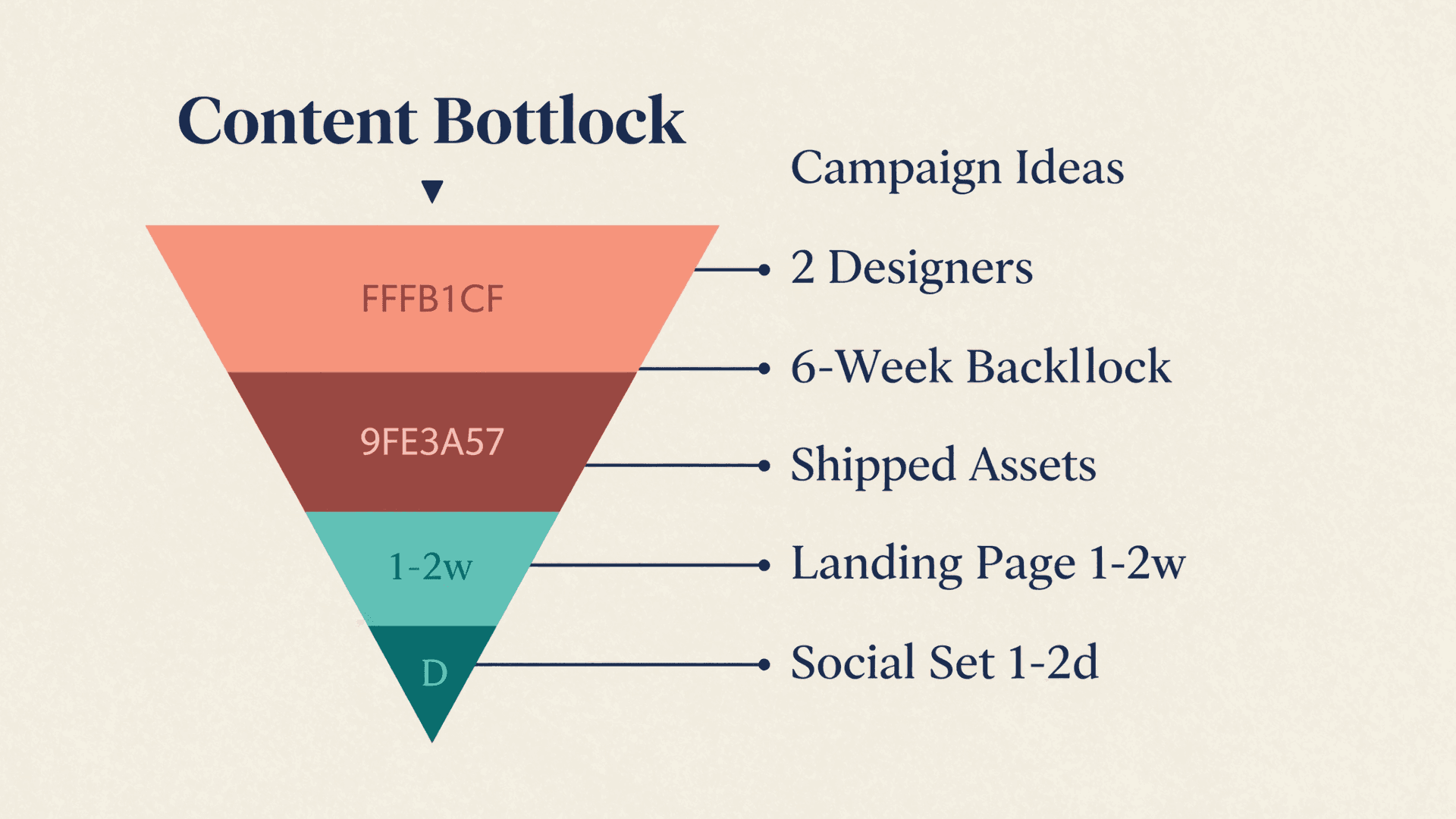
She had two designers. The backlog was six weeks deep. Every new campaign started with the same negotiation: what do we cut to make room?
This is the problem vibe marketing solves. Not by replacing the marketing team, but by changing how content gets produced. Instead of briefing designers and waiting days for drafts, the team describes what they need and AI agents produce it. The marketing team's job shifts from production management to creative direction.
If that sounds like vibe design applied to marketing, that is exactly what it is. This article covers the specific workflow, the real economics, and the failure modes that growth teams encounter when they adopt AI-driven content production.
What Is Vibe Marketing?
Vibe marketing is the application of AI-first content creation to marketing workflows. The team focuses on strategy, messaging, and creative direction. AI agents handle the production: layout, formatting, visual design, copy variations, and multi-format export.
The "vibe" part is the same as in vibe coding and vibe design. You describe the intent and the mood. "A confident, data-forward deck for enterprise procurement teams. Navy and white. Emphasize ROI over features." That is a vibe, not a specification. The AI system interprets the intent and produces an artifact you refine by feedback rather than by editing individual elements.
This is not the same as "using ChatGPT for marketing copy." That is a prompt. Vibe marketing is a production workflow where AI handles the full pipeline: from brief to finished, multi-format asset.
The Traditional Content Production Bottleneck
Growth teams produce a staggering volume of content. A typical B2B SaaS marketing team needs:
- Sales enablement: pitch decks, case studies, one-pagers, proposals per vertical
- Campaign assets: landing pages, social media graphics, email headers per campaign
- Event materials: booth designs, presentation decks, handout PDFs per event
- Internal communications: board decks, investor updates, all-hands slides per quarter
Each asset requires a brief, a design pass, revisions, and export in multiple formats. At most companies, two or three people do all of this. The math does not work. Either quality drops, timelines slip, or campaigns launch with half the planned assets.
The bottleneck is not creative thinking. It is production throughput.
| Activity | Traditional time | With vibe marketing |
|---|---|---|
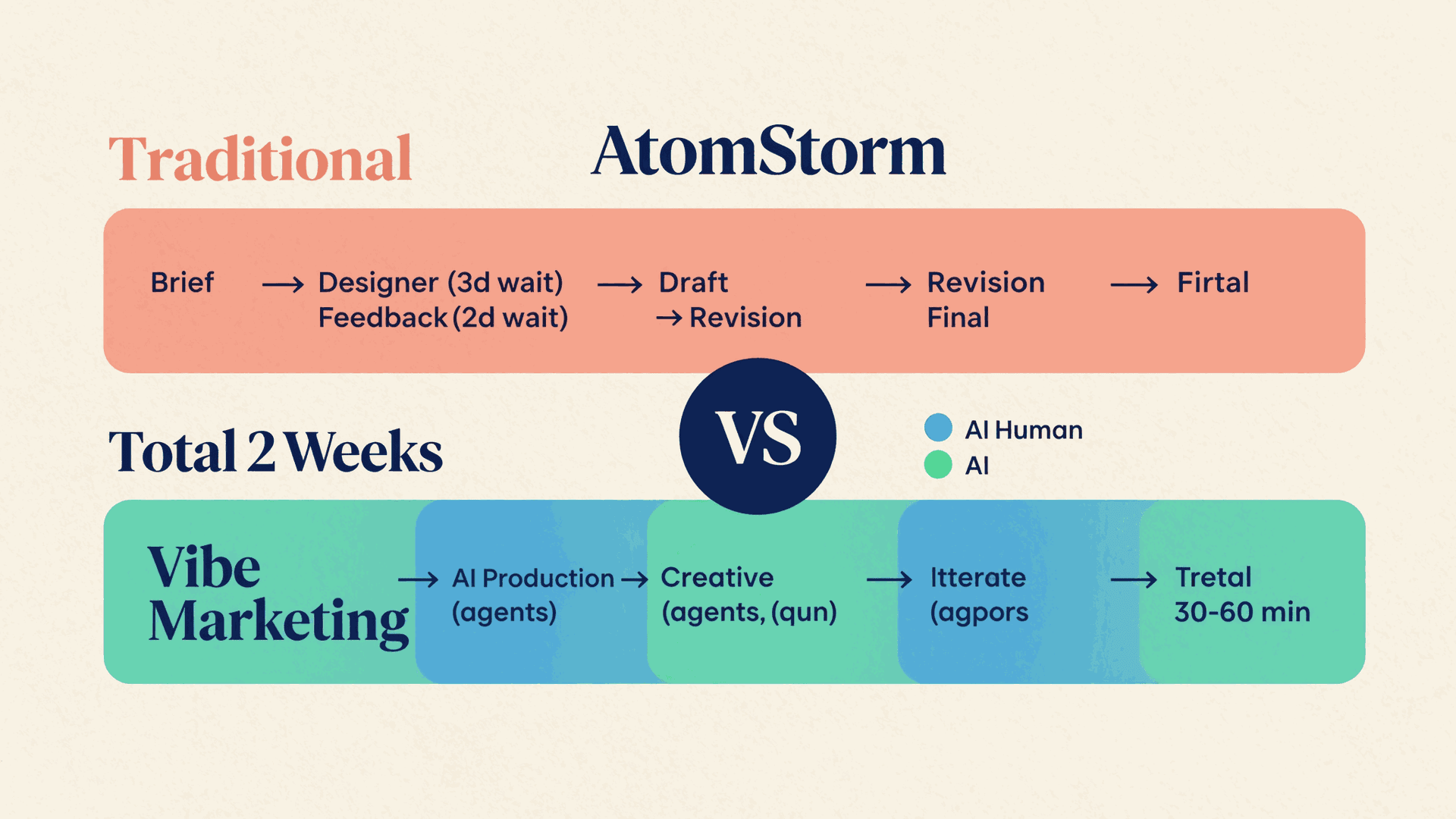
| Sales deck (15 slides) | 3-5 days (brief + design + 2 revision rounds) | 30-60 minutes (describe + iterate + export) |
| Landing page | 1-2 weeks (copy + design + dev + QA) | 1-2 hours (describe + refine + publish) |
| Social media set (5 variants) | 1-2 days per set | 20-30 minutes per set |
| Event presentation | 1-2 weeks | 2-3 hours |
| Campaign asset bundle (deck + landing + social) | 3-4 weeks | 1-2 days |
These numbers come from teams that have adopted the workflow. The first project takes longer because you are learning the system. By the third project, the pattern is internalized.
How Vibe Marketing Works: The Workflow
Step 1: Strategic Brief (Human)
The marketing team writes a brief. Not a detailed specification with font sizes and hex codes. A strategic brief: who is the audience, what is the key message, what action do we want them to take, and what is the emotional tone. Two to five sentences.
"Series A pitch deck for a developer tools company. Audience: technical VCs. Key message: we have strong developer adoption and a clear path to enterprise revenue. Tone: confident, data-driven, no hype."
Step 2: AI Production (Agent)
The AI system takes the brief and produces a first draft. On a multi-agent platform, different agents handle different aspects: one structures the narrative, another designs the layout, a third checks brand consistency. The multi-agent approach produces better results than a single model because each agent specializes.
Step 3: Creative Direction (Human)
The marketing team reviews the draft and gives feedback in natural language. "Move the traction slide before the product deep-dive. Make the market size visual more prominent. Tone down the technical jargon in the opening." This is creative direction, not pixel-pushing.
Step 4: Iteration and Export (Agent + Human)
The system incorporates feedback and produces a revised version. The team reviews again. When satisfied, they export: PPTX for the sales team, PDF for email attachments, PNG slides for social media.
The critical insight: the marketing team never opens PowerPoint or Figma. They work at the level of strategy and creative judgment. The production layer is handled by AI.
The ROI Question
Marketing leaders want numbers. Here is how to think about the economics.
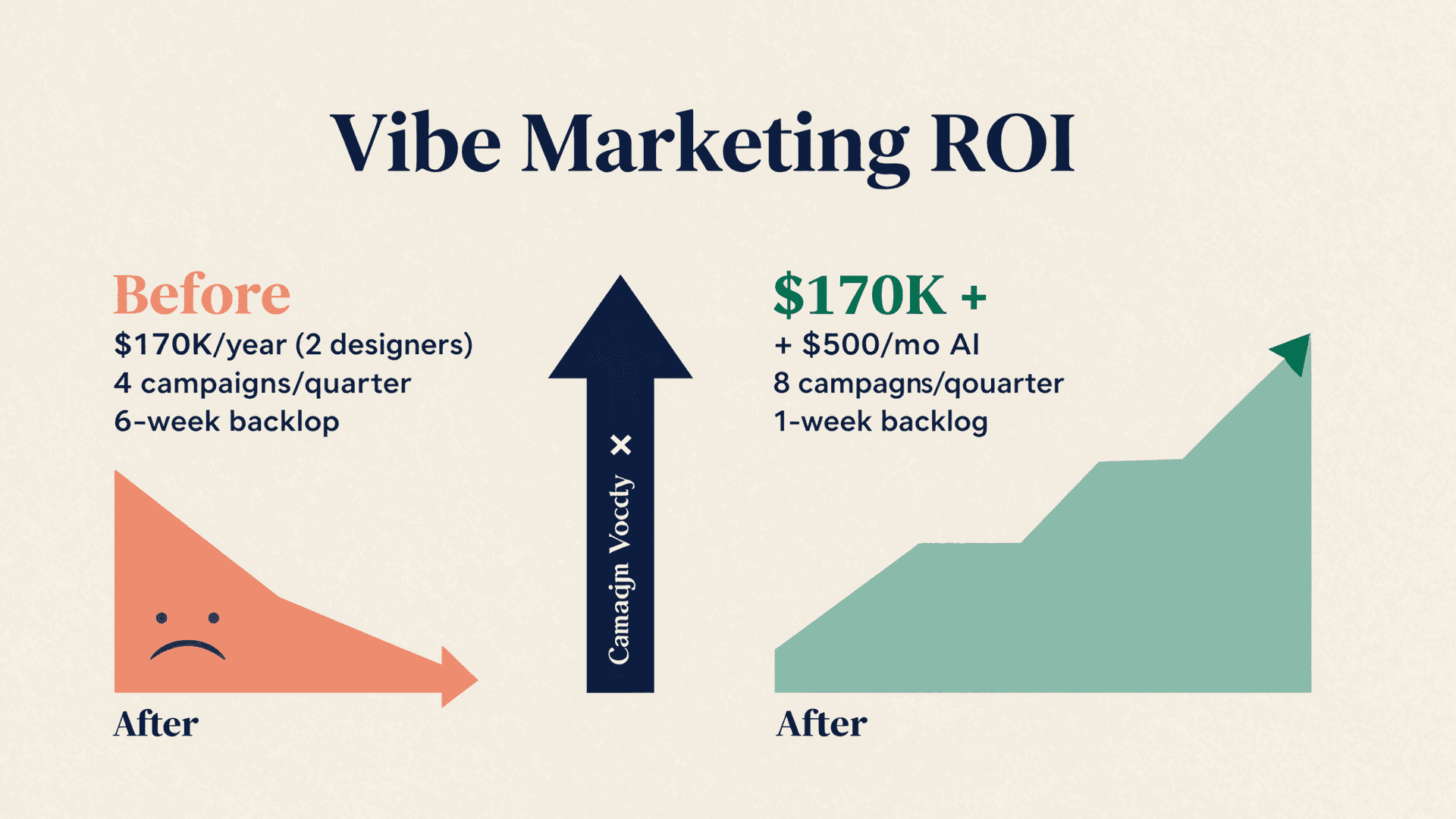
Cost of current workflow: A mid-level designer in a major market costs $70,000-$100,000/year fully loaded. A team of two designers at $85,000 each is $170,000/year. They produce a fixed number of assets per month, and the backlog determines how many campaigns ship on time.
Cost of vibe marketing: An AI platform subscription ($50-$500/month depending on volume) plus the same marketing team's time spent on creative direction instead of production management. The designers do not disappear. They shift from executing briefs to setting brand standards, creating templates, and handling the 10% of work that requires novel creative thinking.
What changes: Campaign velocity. A team that shipped four campaign asset bundles per quarter now ships eight. The assets that used to get cut from the plan because of production capacity now get produced. The backlog drops from six weeks to one.
The ROI is not "replace designers with AI." It is "ship twice the campaigns with the same team." That is a concrete, measurable outcome.
See what this looks like in practice. Explore AtomStorm's features to understand how multi-agent AI handles marketing content production.
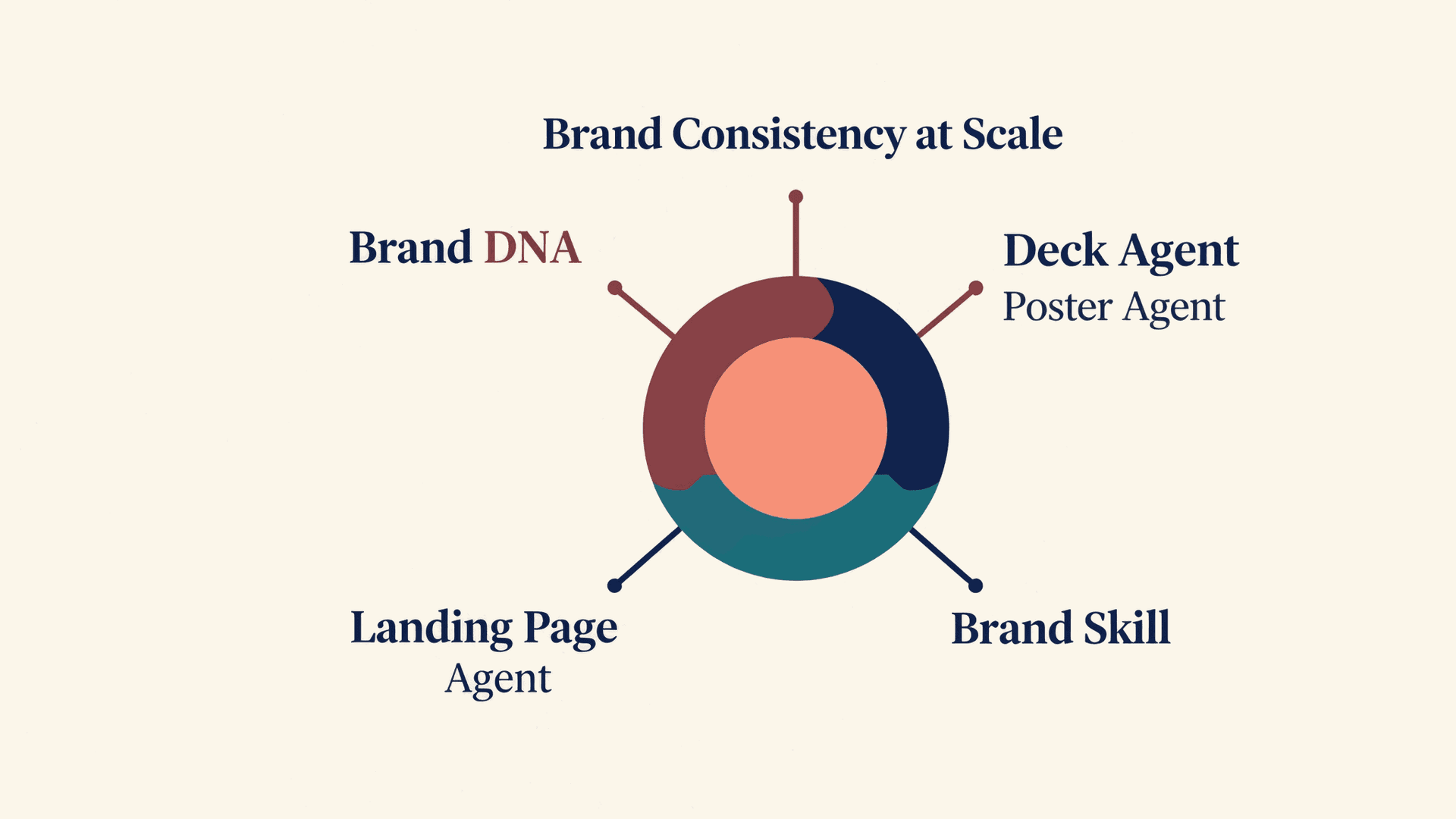
Brand Consistency at Scale
The most common objection from marketing teams: "AI output will not match our brand."
This concern is valid with generic AI tools. When you paste a prompt into ChatGPT and ask for a slide deck, you get something that looks like every other ChatGPT-generated deck. No brand identity. No visual consistency. No design sense.
Vibe marketing platforms solve this differently. Brand guidelines become part of the skill set that agents load: color palettes, typography rules, voice and tone guidelines, logo placement standards. The agent does not guess your brand. It follows documented rules.
The practical test: take five assets produced by the system for the same brand. Do they look like they came from the same team? If yes, the brand layer is working. If they look like five different companies, the platform's brand handling is cosmetic.
AtomStorm's approach uses HTML Container architecture, which means every element is structured code that can enforce brand rules programmatically. A color that deviates from the palette is not a visual mistake. It is a validation failure that gets caught before export.
Common Failure Modes
Vibe marketing is not a magic solution. Teams that adopt it encounter predictable problems.
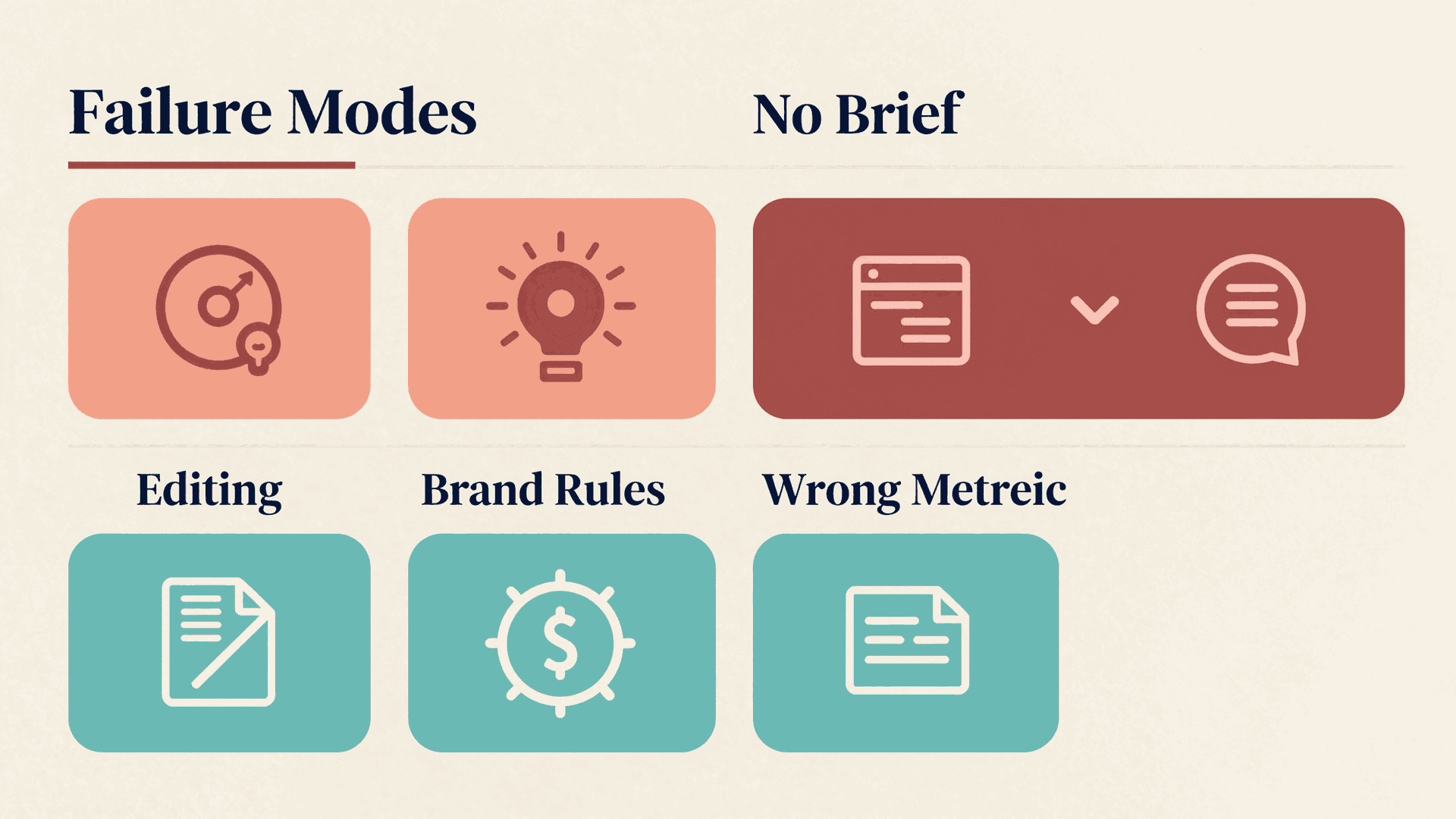
Failure 1: Skipping the brief. Teams excited about speed start prompting without thinking about strategy. The AI produces something fast, but it is strategically wrong. The brief does not need to be long. It needs to exist.
Failure 2: Over-iterating on the wrong level. Spending 45 minutes adjusting the font weight on slide 7 defeats the purpose. If you are doing pixel-level editing on every asset, you are using the tool as a design app, not as a production accelerator. Reserve detailed editing for the 10% of assets that face external scrutiny (investor decks, major campaign hero images).
Failure 3: No brand guardrails. If the platform allows arbitrary styling on every generation, brand consistency depends entirely on what the user types in the prompt. That is fragile. Invest time upfront in defining brand rules that the system enforces automatically.
Failure 4: Measuring the wrong thing. Teams measure "time to first draft" and celebrate. But the metric that matters is "time to shipped asset." If the first draft is fast but takes five revision cycles, the total time may not improve much. Measure end-to-end.
| Failure mode | Symptom | Fix |
|---|---|---|
| No brief | Fast output, wrong message | Require 3-5 sentence brief before any generation |
| Over-editing | Asset production takes as long as before | Set a time box per asset. Reserve deep editing for high-stakes pieces. |
| No brand rules | Every asset looks different | Define brand skill/template upfront. Load it on every generation. |
| Wrong metric | "Draft in 2 minutes!" but shipped asset takes 2 hours | Track time-to-shipped, not time-to-first-draft |
Who Benefits Most from Vibe Marketing?
Growth-stage startups (20-200 employees). Small marketing teams with big campaign ambitions. The production bottleneck is the primary constraint on growth marketing velocity.
Agency teams with multiple clients. Agencies that produce campaign assets for 10-20 clients per month spend most of their time on production, not strategy. Vibe marketing shifts the ratio.
Product marketing managers. PMs who need to produce positioning decks, competitive battle cards, and launch materials but do not have dedicated design support.
Enterprise teams scaling content. Large organizations with brand guidelines that AI can enforce consistently across hundreds of assets per month.
Getting Started
Week 1: Pick one recurring asset type (weekly report, sales one-pager, social media set). Produce it with AI instead of the traditional workflow. Measure time and quality.
Week 2: Define your brand as a reusable input: colors, fonts, tone, logo rules. Feed it to the platform as a template or brand profile.
Week 3: Expand to a full campaign bundle: deck + landing page + social variants from a single brief. Time the entire workflow end-to-end.
Week 4: Review what shipped. Compare quality against assets produced traditionally. Identify where the AI workflow saved time and where human intervention was still needed. Adjust.
The teams that get the most from vibe marketing are the ones that treat it as a production system, not a novelty. They define briefs, set brand rules, measure throughput, and iterate on the workflow itself. The AI handles production. The humans handle strategy.
If you want to operationalize that workflow immediately, start from the AI marketing plan template, connect it to the AI for marketing teams use case, route campaign copy work into create landing page copy with AI, and package recurring distribution work with create social media plan with AI. That combination gives growth teams a cleaner path from strategy brief to published asset bundle.
Start producing campaign assets with AI: AtomStorm's multi-agent workflow handles presentations, posters, and marketing materials from a single brief. Free plan available.