
Most teams first encounter AI content generation through one giant prompt. It feels efficient because you ask for everything in one shot: strategy, structure, writing, and polish. The problem is that the output is hard to review because every decision is bundled together.
That is where a multi-agent AI system changes the workflow. Instead of forcing one model to do everything at once, the system separates planning, drafting, formatting, and review into explicit responsibilities. The output becomes easier to inspect because each stage has a clear job.
A single prompt hides too many decisions
When one prompt tries to handle the whole content workflow, a team cannot easily answer basic questions:
- Did the structure fail, or did the writing fail?
- Is the tone wrong, or is the source material weak?
- Was the layout decision intentional, or just accidental model behavior?
This is why single-step generation often looks fast in a demo and expensive in real work. All the ambiguity returns during revision.
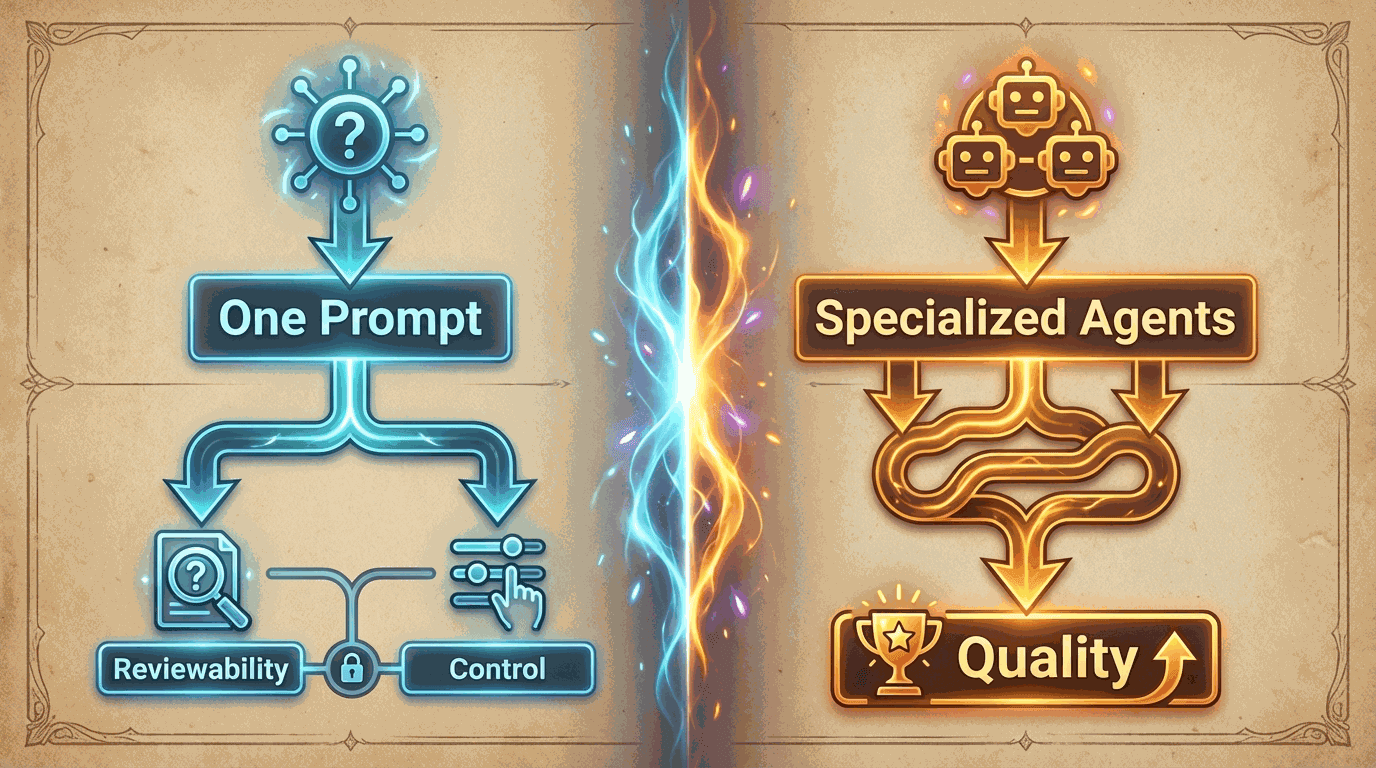
Specialized agents create a reviewable chain
AtomStorm's product and architecture materials consistently emphasize specialization. The platform talks about plan-execute orchestration, dedicated agents, and explicit workflow control because those are not cosmetic implementation details. They are how teams keep the output understandable when a document moves from ideation to review.
For content work, a multi-agent chain usually maps to practical responsibilities:
- a planning layer that shapes the argument
- a content layer that turns the structure into draft copy
- a design or layout layer that decides presentation format
- a QA or review layer that checks consistency before export
That separation is useful because feedback no longer lands in a black box. If the outline is weak, the team fixes the outline. If the formatting is noisy, the team fixes the formatting step instead of regenerating everything blindly.
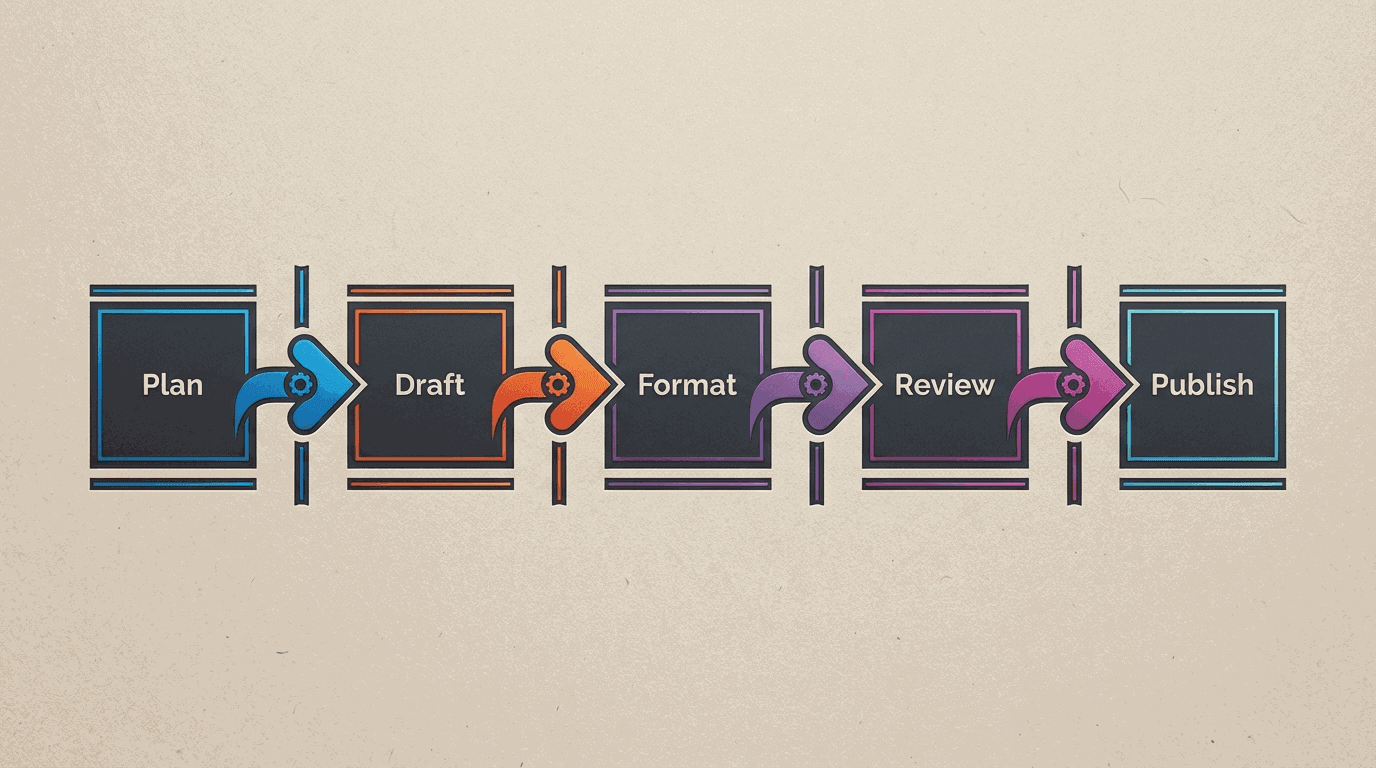
Better systems reduce revision chaos
The value of multi-agent orchestration is not that it sounds advanced. The value is that it reduces revision chaos in recurring workflows:
- pitch decks that need multiple internal reviewers
- sales proposals with reusable structure and account-specific proof
- one-pagers that later become full presentations
- growth content that must stay consistent across formats
In those cases, teams are rarely asking for a one-time magic trick. They are asking for a repeatable system that survives editing pressure.
Quality control improves when steps are explicit
A content workflow becomes safer when each stage can be checked against a concrete standard. That is much harder to do in a one-prompt flow because the model can rewrite structure, tone, and detail all at once.
With specialized agents, teams can ask more disciplined questions:
- Does the outline answer the audience's core question?
- Does the draft support the claims with enough evidence?
- Does the final format match the delivery channel?
- Did export preserve the hierarchy and message order?
These are operational questions, not research-lab questions. They matter because content teams ship under deadlines.
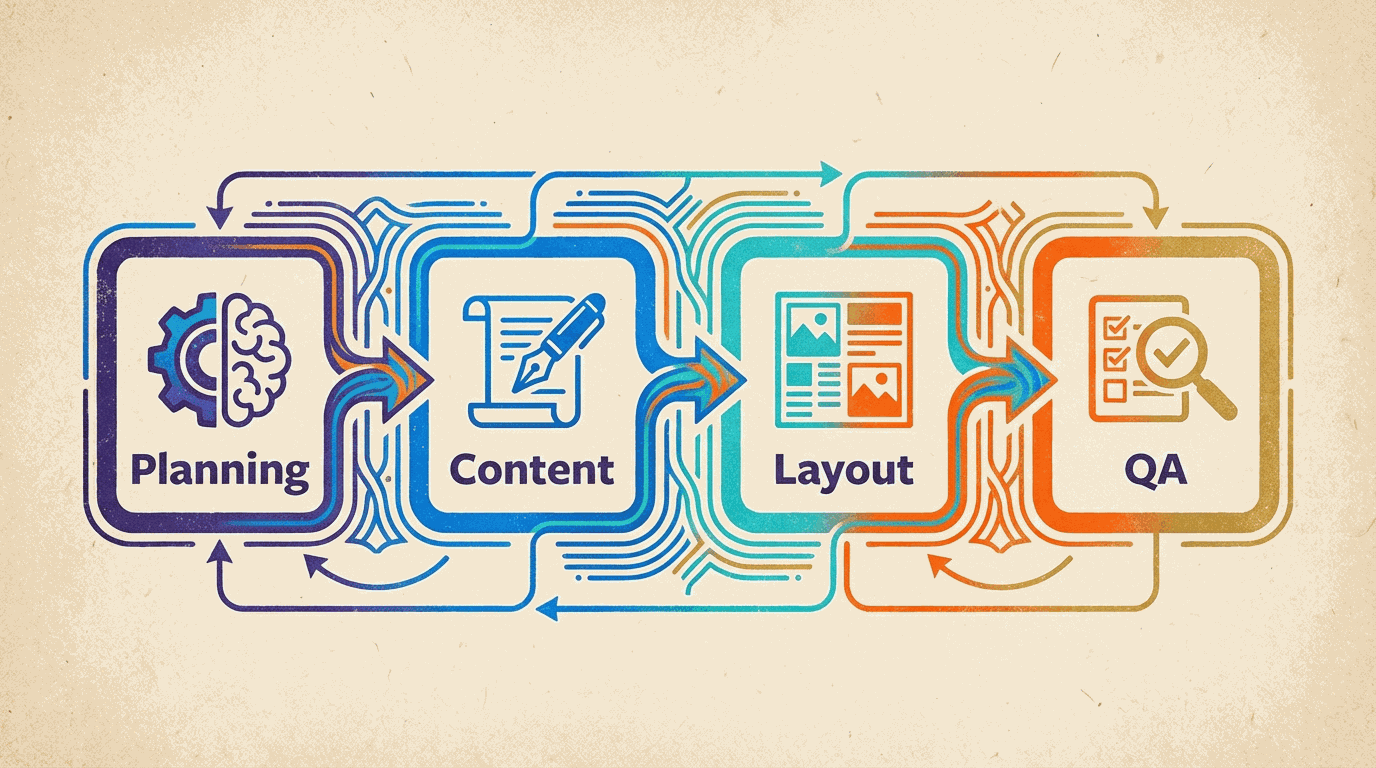
Control matters as much as generation speed
The strongest argument for a multi-agent AI system is not raw generation speed. It is control. Good teams want to move quickly, but they also want to know which layer to adjust when the first version is not ready.
That is why AtomStorm's positioning around editable artifacts, structured workflows, and reviewable outputs makes sense. Multi-agent collaboration is useful when it gives the team a cleaner way to inspect and refine work, not when it becomes another opaque layer.
A practical rule for evaluating multi-agent systems
If you are evaluating AI content platforms, ask one question before all the others:
Can the system show you where decisions were made, or does it only show you the final draft?
If the answer is only the final draft, you will probably end up doing manual cleanup. If the answer includes explicit planning, editable output, and clear stages, the AI is acting more like a working system and less like a slot machine.
Where to go next
If you want to see the broader product context, review the features page for workflow control and export support. If your team is currently evaluating presentation tooling, the companion guide on the AI pitch deck generator shows how the same principles apply in a concrete presentation workflow.
For the architectural concepts behind multi-agent orchestration, see our deep dive on agentic AI workflows and how the plan-execute pattern works in practice. To understand how agents acquire specialized capabilities, read AI agent skills explained.