
An AI sales proposal template is only useful if it reduces rework. That sounds obvious, but many proposal tools still generate drafts that look polished at first and then collapse the moment a sales lead asks for account-specific proof, a legal change, or a different pricing narrative.
The real job of a template is not to write the whole proposal for you. The job is to preserve the parts that should stay consistent while keeping the deal-specific sections easy to rewrite.
Start with reusable structure
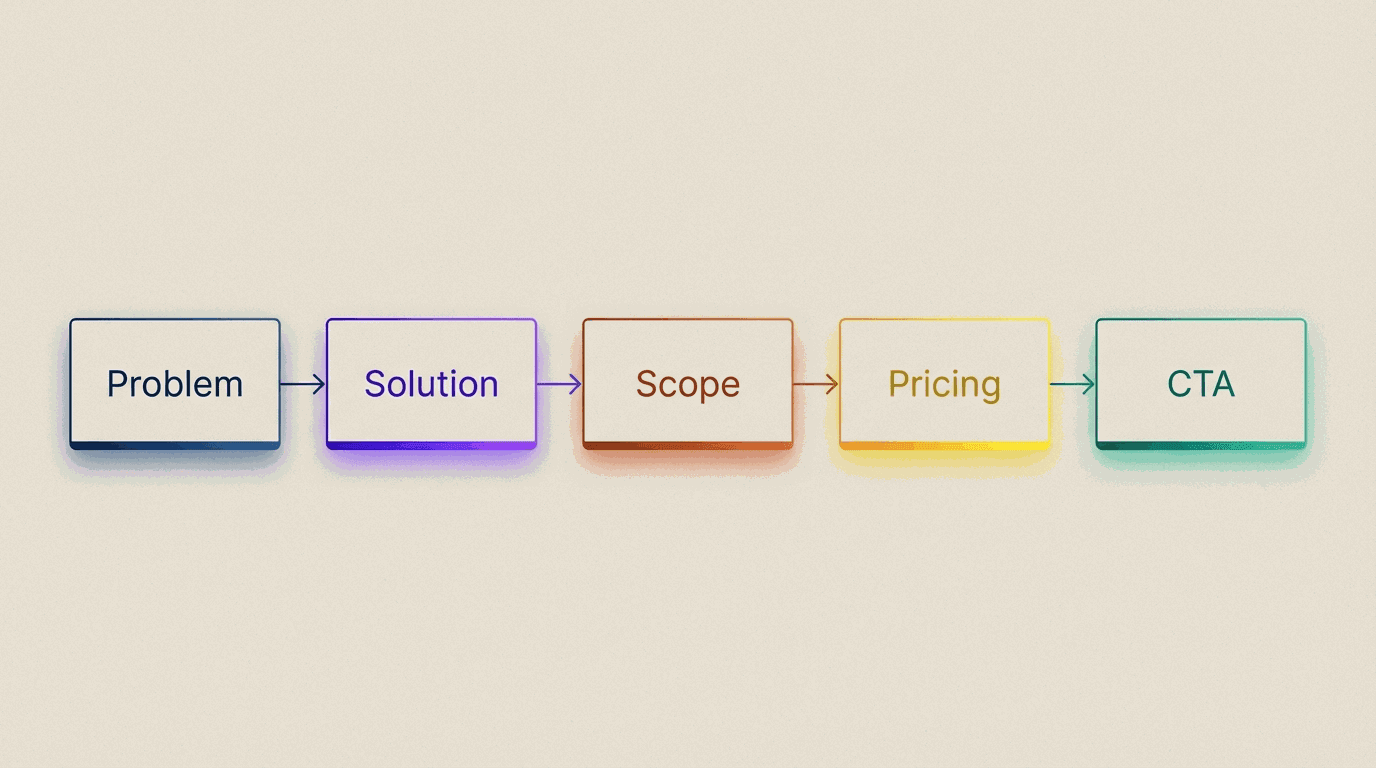
Most proposal teams repeat the same foundation across deals:
- problem framing
- solution overview
- implementation scope
- pricing logic
- timeline or next-step CTA
That is exactly where AI templates help. Instead of rebuilding the skeleton every time, the team can reuse a structure that already reflects how the company sells.
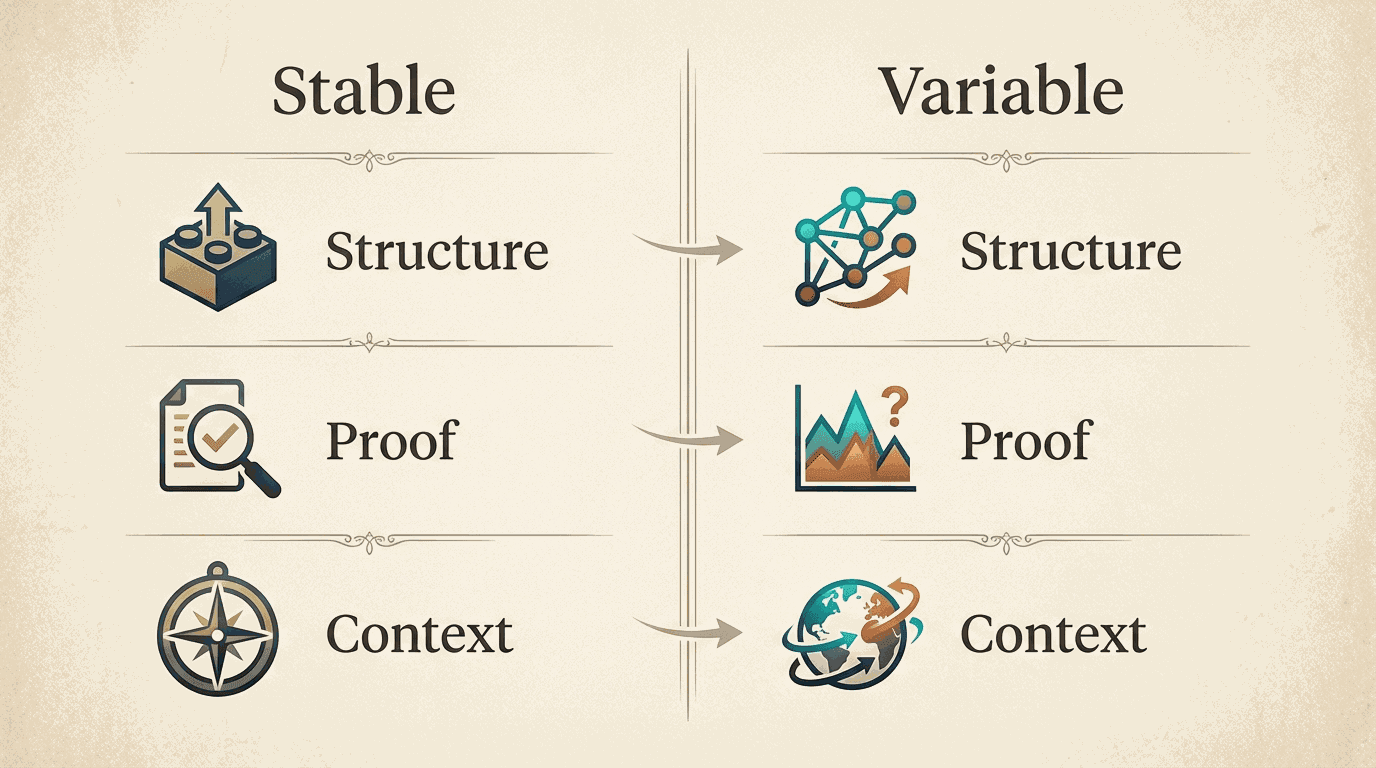
The mistake is assuming that reusable structure means generic messaging. It does not. A good AI proposal workflow keeps the stable sections stable and makes the variable sections obvious.
The template should expose the parts that must change
Proposal quality usually rises or falls on specific context:
- the buyer's current pain
- proof points that match the industry
- the scope boundary that keeps the project realistic
- the commercial framing that fits the deal stage
If your template hides those decisions behind a frozen block of text, the team will either ship something generic or waste time rewriting the whole document. That is why editability matters as much as generation speed.
AtomStorm's approach to document generation is relevant here because the output is meant to stay editable after generation. That gives sales, consulting, and operations teams room to adapt the message without rebuilding the whole proposal from scratch.
Standardization helps the review process
Proposal work is usually collaborative. Sales owns the opportunity, subject-matter experts validate the solution, leadership checks commercial fit, and sometimes design or operations helps tighten the final document.
Templates reduce review friction when they make the document predictable:
- reviewers know where to find the scope
- approvers can jump straight to pricing and commitments
- writers know which sections can be reused safely
- designers can polish the same layout system repeatedly
That predictability is a business advantage because proposal cycles are often constrained by deadlines.
AI is most useful when it accelerates the middle
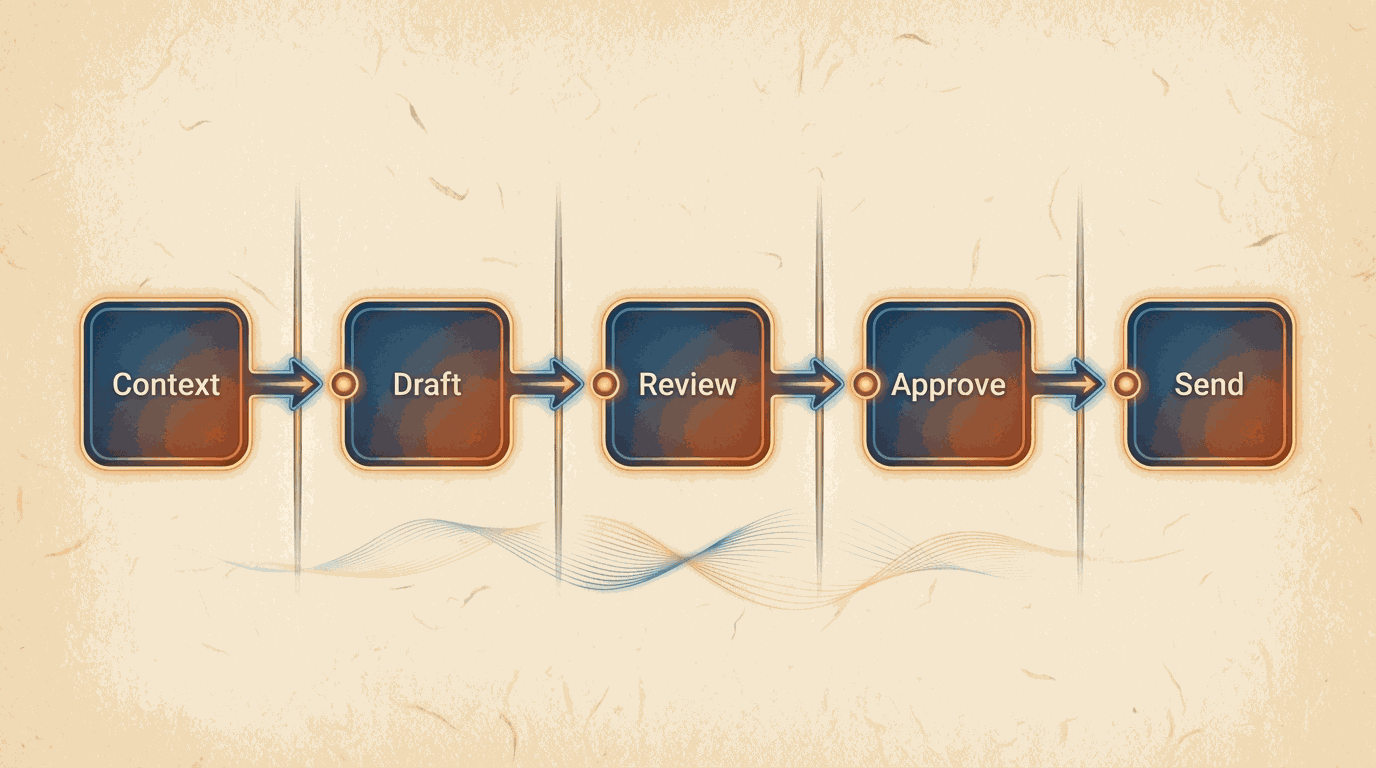
The strongest place for AI in proposals is the middle of the workflow:
- after the team has enough deal context
- before the final review and approvals
At that point, the system can help turn known inputs into a structured draft. It should not replace commercial judgment, and it should not introduce claims that the team cannot support. It should simply accelerate the assembly of a proposal the team already knows how to sell.
That is also why validation still matters. A proposal is not a blog post. If the document includes wrong commitments, vague scope, or weak evidence, the team pays for it later in the deal process.
Reuse should improve quality, not just speed
The best templates do more than save time. They improve quality by keeping the team aligned on:
- how the company frames value
- how scope is explained
- which proof types are persuasive
- how the proposal moves toward a clear next step
That is far more useful than a flashy generator that produces a different structure every time.
What to look for in an AI sales proposal template workflow
When evaluating tooling, look for five things:
- A reusable structure that reflects how your team actually sells.
- Editable output that does not force manual rebuilding.
- Clear handoff points for review and approval.
- Export quality that survives sharing and presentation.
- Enough control to adapt the message to account context.
If any one of those is missing, the template will save time in the first ten minutes and lose time everywhere after that.
Where to go next
If your team wants a reusable starting point instead of rebuilding the document structure manually, open the AI sales proposal template first. Revenue teams that need to operationalize the same proposal logic across onboarding, rollout, and collateral review should also map it into the AI for sales enablement use case. Consulting teams packaging the same logic into client-facing scopes can continue into the AI for consulting proposals use case. If your team also builds decks from the same sales narrative, the AI pitch deck generator guide shows how editable structure carries into presentation work. If you need the broader product view, the features page outlines how workflow control, export support, and multi-agent orchestration fit together.