
Enterprise teams usually do not struggle with AI because the models are unavailable. They struggle because the organization is not designed to absorb AI output cleanly.
One team wants more blog production. Another wants faster campaign execution. Sales wants better proposal velocity. Legal wants fewer unreviewed claims. Brand wants consistency. Everyone wants AI to help, but nobody wants the downside of low-trust output hitting production.
That tension is real. The fix is not to slow everything down. The fix is to design governance into the content system before scale begins.
Define ownership at the workflow level
The first governance question is basic: who owns the output at each stage?
Without clear ownership, AI creates organizational fog. A draft exists, but nobody knows who signed off on the claims, who validated the positioning, or who approved the CTA. Once that happens, speed disappears anyway because every stakeholder re-reviews the work from scratch.
A workable enterprise model assigns owners by stage:
- strategy owns topic and funnel fit
- subject-matter reviewers own accuracy
- brand or editorial owns messaging consistency
- channel owners own packaging and publication
AI can accelerate each stage. It cannot replace the accountability boundary.
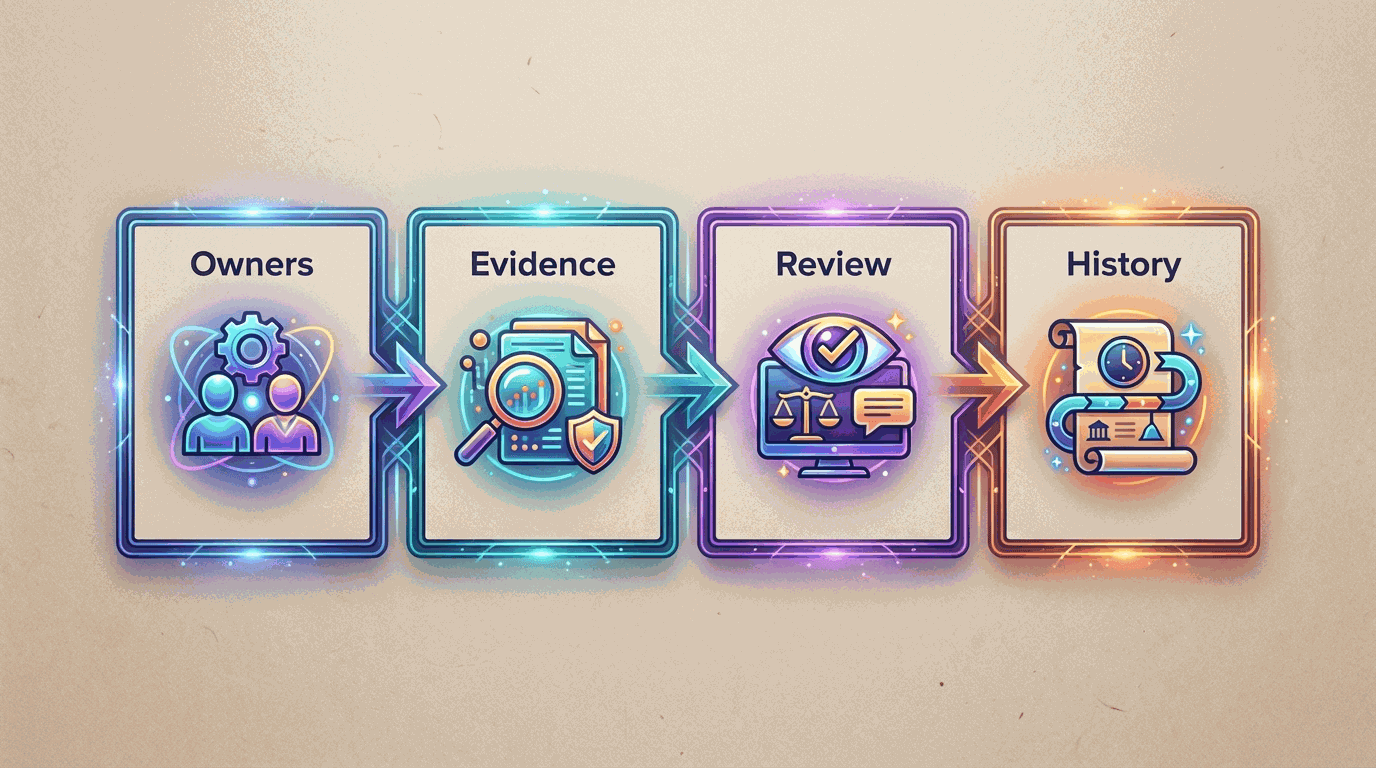
Evidence rules must be explicit
In enterprise environments, vague claims are expensive. They create legal risk, compliance risk, and credibility risk all at once.
That means content workflows need explicit rules about what can be stated and what requires proof. A useful standard looks like this:
- product claims must map to documented capability
- performance claims need a cited source or internal dataset
- competitor comparisons need review before publication
- customer outcomes need permission and attribution rules
The more explicit those rules are, the easier it is to let AI generate drafts safely. The machine can move fast because the guardrails are concrete.
Standardize review gates by channel
Not every content type needs the same review depth. A social teaser does not need the same scrutiny as a landing page or partner proposal.
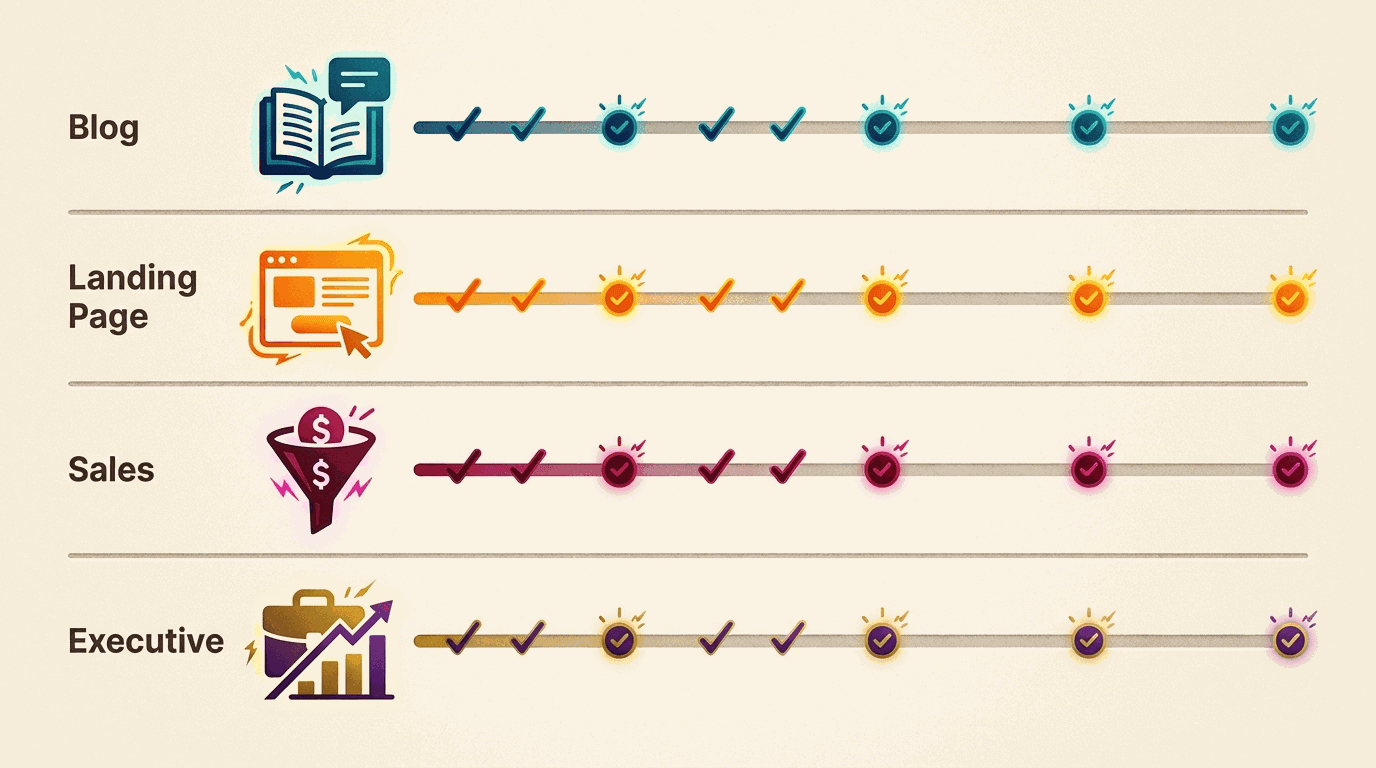
Enterprise teams benefit from channel-specific gates:
- blog articles: editorial + subject review
- landing pages: editorial + product marketing + conversion review
- sales content: revenue enablement + legal review when required
- executive communications: senior stakeholder signoff
This matters because AI content strategy is not one workflow. It is a family of workflows that share common assets but operate under different risk levels.
Centralize reusable source material
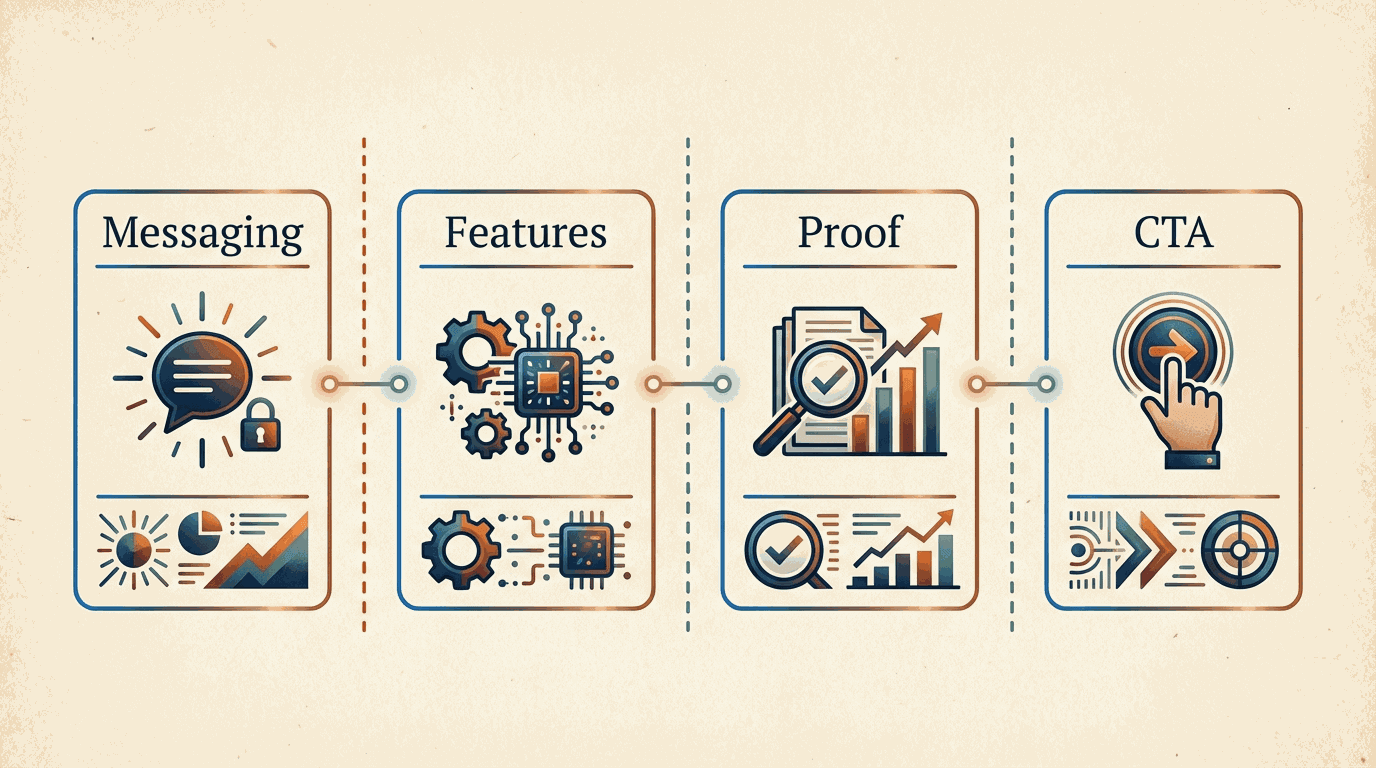
The fastest enterprise teams do not ask the model to invent business truth every time. They maintain approved source material:
- messaging pillars
- feature descriptions
- proof points
- objection-handling language
- CTA options by audience
- internal link and cross-sell references
This does two things. It improves consistency, and it lowers review cost. Reviewers spend less time correcting basic facts and more time improving the final asset.
Governance should enable speed, not block it
Poor governance adds friction everywhere. Good governance removes ambiguity so teams can move faster with less argument.
The right measure is not how many approvals exist. It is whether the right people can approve the right thing quickly because the workflow is clear.
That is what enterprise AI content strategy is really about. It is not a story about prompt magic. It is a story about operational design:
- clear owners
- reusable facts
- explicit evidence rules
- channel-aware review
- visible publication history
Once those pieces are in place, AI stops being a risky side experiment and becomes part of the production system.
If you want to turn that governance model into repeatable execution, start with the AI marketing plan template and the AI for marketing teams use case. Teams that need proposal governance on the revenue side should also map the same controls into the AI sales proposal template. Internal enablement programs can carry the same governance model into the AI for HR training materials use case.