
Cross-platform output looks easy until you care about fidelity.
The moment an artifact needs to move between preview, export, editing, and embedding contexts, weak rendering architectures start showing cracks. Spacing shifts. Text becomes an image. Assets stop being editable. Small visual decisions get flattened into screenshots, and every downstream change becomes expensive.
That is why HTML container-based output matters. It keeps the artifact as a structured document instead of collapsing it into pixels too early.
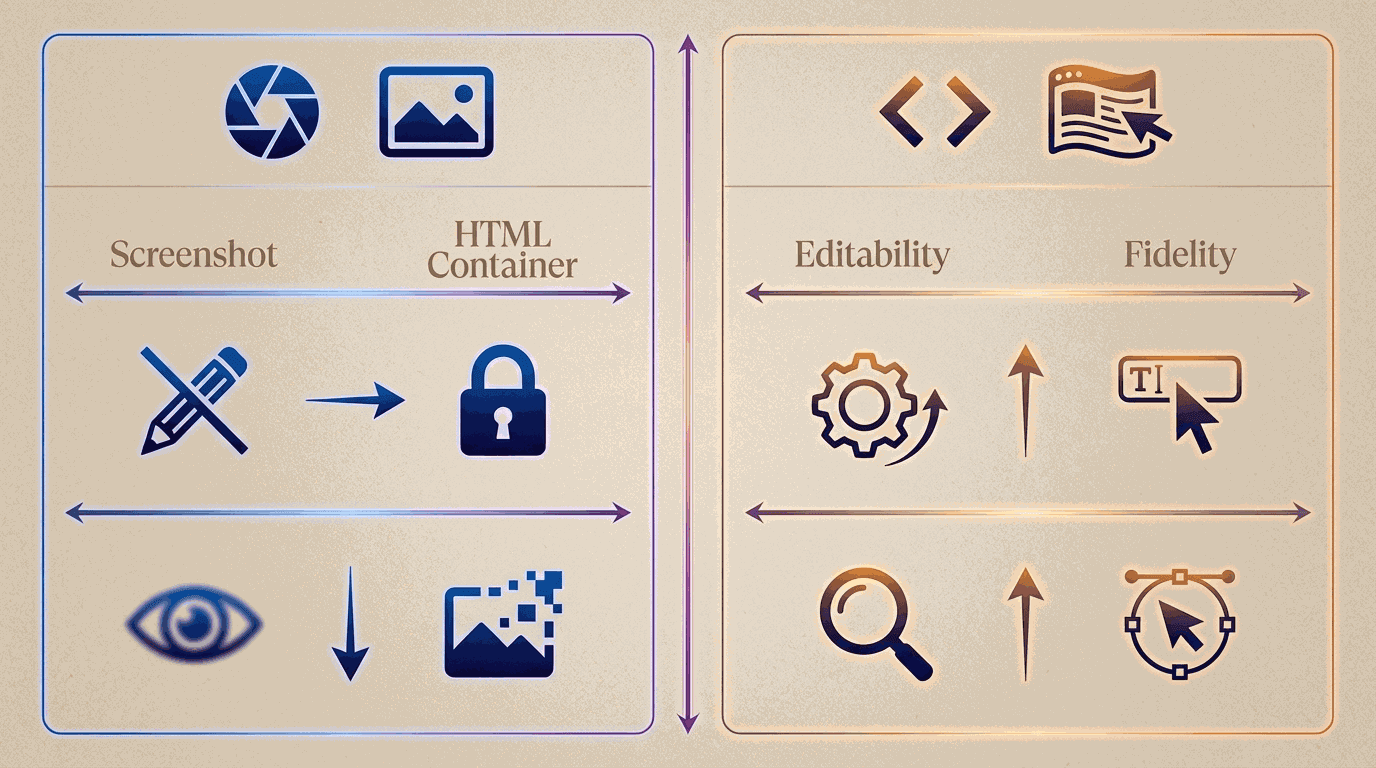
Screenshots are convenient, but they destroy leverage
Screenshot-first systems feel fast because they reduce everything to a single output format. The rendering problem appears solved because there is nothing left to interpret.
But that convenience comes with heavy tradeoffs:
- text is no longer semantically editable
- layout changes require regeneration instead of direct editing
- accessibility drops because structure is lost
- export quality depends on rasterization limits
- downstream automation becomes fragile
In other words, screenshots remove complexity by throwing away capability.
HTML containers preserve structure
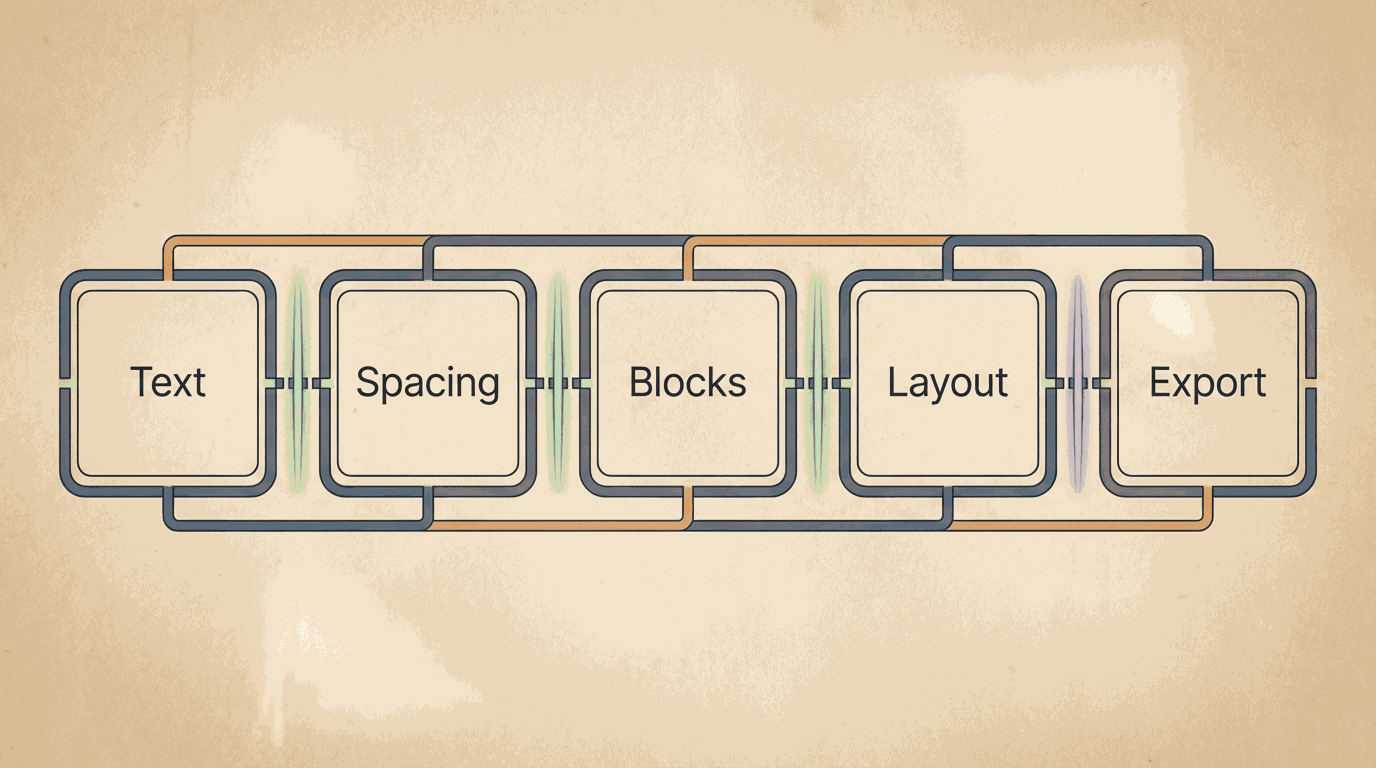
An HTML container keeps each artifact as a composition of real elements:
- text stays text
- spacing stays rule-based
- blocks remain addressable
- layout can be inspected and modified
- export pipelines have access to the underlying structure
That structure matters because it gives the system room to adapt. A preview surface can render it one way, an export pipeline can transform it another way, and a human can still edit specific parts without rebuilding the entire asset.
Editability is a product feature, not an implementation detail
Teams often discover too late that output quality is not only about how the first render looks. It is also about what happens after the first render.
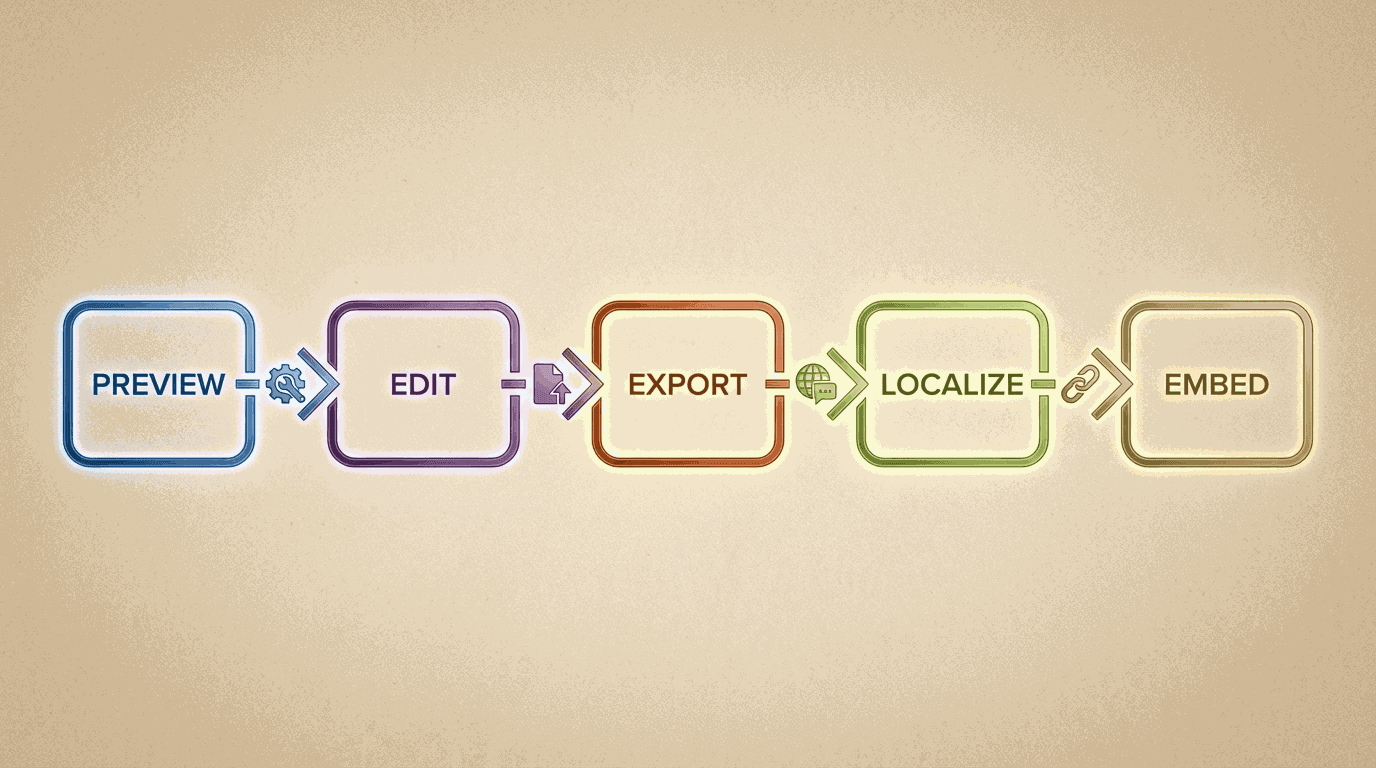
Real workflows need to:
- tweak messaging after review
- localize content
- resize assets for another channel
- swap charts or screenshots
- export into downstream tools
When the underlying artifact is a structured HTML container, those tasks stay manageable. When the artifact is effectively a frozen image, every change becomes a mini re-production cycle.
Cross-platform fidelity improves when the source stays rich
There is no perfect universal rendering layer. But there is a clear rule: the richer the source representation, the more options you keep for later transformations.
HTML containers are valuable because they preserve:
- hierarchy
- semantics
- styling intent
- element boundaries
- layout relationships
That gives cross-platform delivery a better starting point. You still need good export tooling, but you are exporting from a living document instead of reconstructing one from pixels.
Choose the architecture that survives iteration
A lot of generation systems are optimized for the demo moment. They look good in the first preview but degrade under real editing, export, or localization pressure.
HTML container architecture is less flashy, but it solves the real problem: how to keep generated output usable after generation.
That is the right standard for production systems. Not "Can it render once?" but "Can the artifact survive the next five things a real team will do to it?"
If the answer needs portability, fidelity, and editability, structured HTML wins.
This architecture is also what makes vibe design practical: users describe what they want, AI agents generate structured HTML, and every element remains fully editable at export. For teams producing architecture diagrams with AI, the HTML Container approach means diagrams are not locked images but editable visuals you can refine and re-export.